Stage One
Soybean Oil Processing:
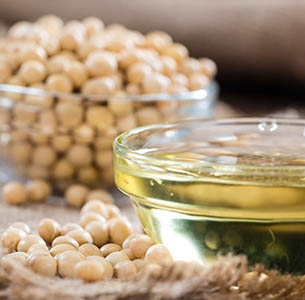
Soybean oil is a vegetable oil extracted by processing soybeans. It is one of the most widely used cooking oils.
Processed soybean oil is also used as a base for printing inks and oil paints, in making soap, and as a source of fatty acids or fuel.
Initial Dehulling
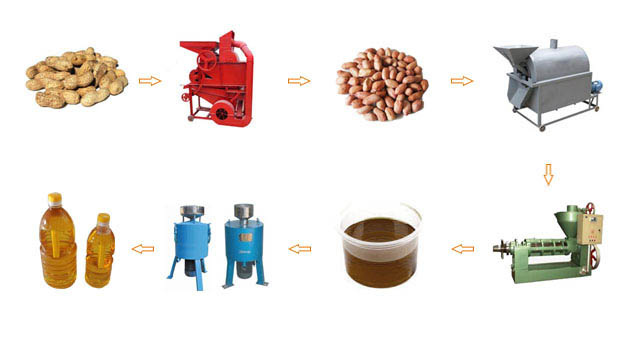
The first step in soybean processing is properly preparing the beans for dehulling.
This step typically involves using magnets to remove metal and screening to remove impurities that could interfere with the dehulling process.
In the next step, the hulls are removed to increase the protein and oil content of the final product.
Finally, mechanical rollers are used to flatten the beans into thin flakes and rupture the cells containing the soybean oil.
Oil Extraction and Solvent Recovery
In the soybean oil extraction process, hexane or other solvents are used to wash the oil out of the soybean flakes.
Once the oil has been removed by the solvent, the solvent must be removed from both the flakes and the soybean oil.
For the flakes, heat and steam are used to strip and recover the residual solvent. For the soybean oil, a distillation system is used to recover the solvent.
Once the oil is fully purified, it is ready for food use.
Oil Refining and Processing
The extracted, desolventized soybean oil must be processed further to produce an edible product.
At oil refineries, edible oils are refined using processes that clarify and deodorize the oil, improving its quality.
This improves its flavor, aroma, color, and stability.
These refining processes remove contaminants such as phosphatides, free fatty acids, and pro-oxidants.
The residues and impurities from these oils are used as by-products.
Stage Two
Textured Soy Protein Processing:
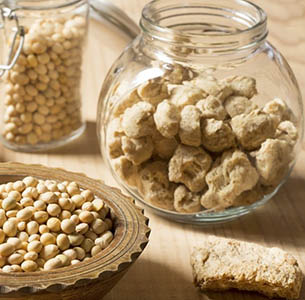
After the soybean oil is separated, the output is soybean meal, whose high protein content makes it a suitable food source for human nutrition.
Milling
When the purchased meal arrives at the plant, the laboratory manager takes samples of the incoming soybean meal.
The raw material is unloaded only after it passes the laboratory tests and is approved by the quality control manager.
It is then sent to the cleaning sieve, where it is freed of all impurities such as soybean hulls and any other foreign matter.
The cleaned raw material is conveyed to the milling section.
At this stage, milling produces a uniform, finely powdered flour.
The uniform flour, now ready for production, is then carried by conveyor to the extruder section.
Pre-Cooking, Extrusion, and Cooking
At this stage, the soy flour first enters the pre-cooking step.
Here the soy flour is sterilized and pre-cooked using high-pressure steam supplied by the boiler.
The prepared dough then undergoes full cooking in the extruder, where pressure and steam applied to the protein structure break down the protein chains and align them so that they become digestible for the human stomach.
Next comes the shaping and texturizing step.
After that, the machine's cutter cuts the prepared soy into smaller pieces of various shapes.
Finally, the product passes through the dryer and cooler for 20 minutes at 60 degrees Celsius to dry and cool.
Grading and Packaging
Finally, after leaving the cooler, the product is carried by an elevator to the grading sieve.
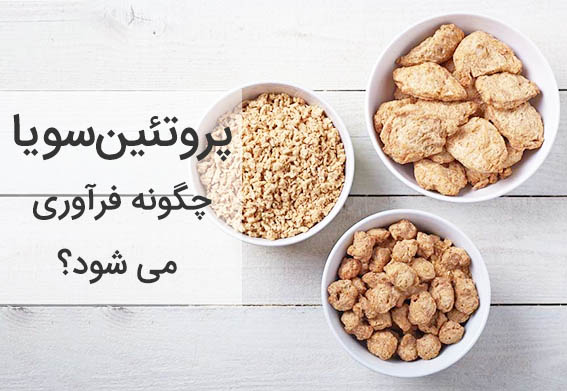
In the grading sieve, depending on the screens used, the product is sorted into 5 different types:
Soy Type 1 (powder), Soy Type 2 (fine, sesame-size), Soy Type 3 (medium), Soy Type 4 (coarse) and Soy Type 5 (large chunks).
Each type has different uses depending on market demand. In any case, after leaving the grading sieve, the final product enters the finished-product silo.
At this stage, it enters the bagging machine, where it is sewn and packaged in various weights.
Finally, the finished Soya Protein Pars product is stacked on pallets and kept in the product warehouse until microbiological and chemical test results are obtained, after which it is ready for shipment.
Source: www.crowniron.com